One couple has chosen a photographer, but the update still needs to make its way into the rest of the wedding plan. Another needs a revised timeline. A third has sent a seating change in a message you meant to come back to.
None of these things is particularly difficult on its own. The difficult part is keeping track of what changed, who needs to know, what needs to happen next and which other parts of the wedding are affected - while several weddings are moving at the same time.
For professional wedding planners, staying organized is no longer just a matter of keeping a folder for every couple. You need to see what is happening across your entire season while still keeping the details within each wedding connected.
Here are seven questions worth asking before something slips.
1. Can you see what is due across every wedding this week?
Your calendar may show you when each wedding is happening. It does not necessarily show you all the work accumulating before it.
One week could include a venue visit for one couple, a final headcount for another, two vendor confirmations, a questionnaire to review and a timeline that needs revising. When those tasks live across separate spreadsheets, documents, inboxes and message threads, the week can look manageable until you are already in the middle of it.
Look across all your active weddings together. What is due in the next seven days? Who owns each task? Which deadlines are waiting on a decision from a couple or vendor? Which weddings have several important deadlines approaching at once?
Managing multiple weddings becomes much easier when you can see the workload across all of them rather than opening each wedding individually and trying to reconstruct your week.
Ayyla’s Planner HQ is designed to give planners that cross-wedding view, bringing active projects, tasks and deadlines into one place.
2. When one decision changes, can you see what else it affects?
A couple confirms a photographer. That decision does not belong only on a vendor list. It may affect the budget, payment schedule, timeline and information shared with the couple.
Or the ceremony moves back by an hour. Now the venue, transport provider, photographer, entertainment and planning team may all need updated timings.
Wedding planning is full of decisions like this. The challenge is rarely recording the original decision. The challenge is remembering everywhere else that decision needs to be reflected.
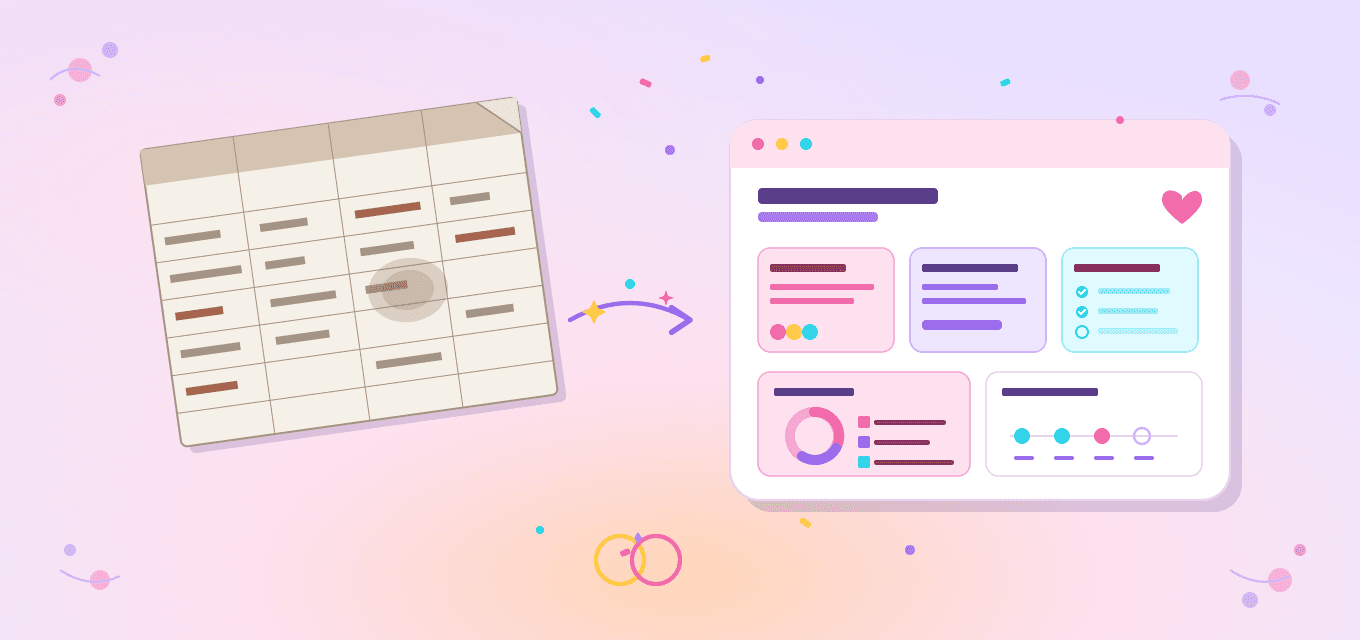
This is where disconnected tools create extra work. A vendor may be confirmed in one place, added to a budget somewhere else, entered into a timeline later and then shared with the couple separately. Every additional step creates another opportunity for something to fall out of sync.
A better planning system keeps the information around a wedding connected so that vendors, budgets, timelines, documents and decisions are not treated as completely separate pieces of work.
That is one of the principles behind Ayyla: the context of a wedding should move with the planner rather than having to be rebuilt every time they move between tools.
3. Does each couple know where to find the latest plan?
A couple asks for the current budget. You send the spreadsheet. A few days later, they ask which vendors they shortlisted. Then one of them cannot find the questionnaire, while the other is looking at an older seating plan.
Each request is small, but across ten or fifteen weddings, they become a significant amount of work.
The problem is not that couples want visibility. They should have visibility into the parts of the wedding they are working on with you. The problem is when collaboration is scattered between email, WhatsApp, shared drives, spreadsheets, PDFs and links sent weeks apart.
Each wedding needs a clear place where the couple can find what is current.
In Ayyla, every wedding can have its own Couple Workspace where the planner chooses what to share. That can include questionnaires, vendors, budgets, tasks, documents, guest information, floor plans and other parts of the wedding.
The important part is the separation between collaboration and internal work. The couple gets a focused place to participate in the planning process, while your private notes, internal tasks and behind-the-scenes decisions can remain with your team.
4. Could someone else on your team pick up the wedding tomorrow?
Imagine you are unavailable for a few days. Could someone on your team open a wedding and understand which vendors are confirmed, what is still being decided, what the couple is waiting for, which payments are coming up and what needs to happen next?
If the answer depends on them reading through your messages or asking you to explain the wedding from memory, too much of the plan is living with you rather than in the system.
This matters even if you are a solo planner. A day-of assistant, freelancer, coordinator or backup planner still needs to understand what is happening without receiving a two-hour verbal handover.
The goal is not to document every thought you have. It is to make the important context easy to find: decisions, vendor details, documents, tasks, next steps and the current state of the wedding.
Ayyla keeps that information within the wedding project and allows planners to control access for their team, making it easier for someone else to step into the work when needed.
5. Can you see your busiest weeks before they happen?
A season with twelve weddings is not twelve evenly distributed blocks of work. Several weddings may enter their final planning stages at the same time.
Suddenly you are reviewing timelines for three couples, confirming guest counts for two more, checking vendor arrivals, revising seating plans and chasing final payments - all within the same few days.
By the time a week feels overwhelming, it is often too late to redistribute the work properly.
Look ahead instead. Which weeks have the most weddings approaching their final six weeks? What is likely to be due across those weddings? How many client meetings will happen during the same period? Which deliverables require revisions rather than a single round of work? Which tasks could be moved forward, and where could someone else on your team take ownership?
Capacity planning is not only about the number of weddings you book. It is about understanding when the work behind those weddings will actually happen.
Seeing active projects, tasks and team workloads together gives you the opportunity to adjust before everything becomes urgent.
6. Are you entering the same information more than once?
This is one of the easiest signs that your planning system is creating work for you.
A vendor gets confirmed. You update the vendor spreadsheet, then the budget, then the payment tracker, then the timeline, then the couple-facing document and perhaps the internal notes for your team.
Nothing about those updates is individually complicated. But repeated across every vendor and every wedding, they consume a surprising amount of time.
The same thing happens with guest counts, venue changes, event timings and other planning decisions. Ask yourself how many times you enter the same piece of information, how many places need updating when something changes and how often you have to check two tools against each other to make sure they still match.
The goal should not be to become better at copying information between systems. It should be to reduce how often you need to do it in the first place.
A connected wedding planning system gives information a clear home and allows the rest of the plan to use that context rather than requiring the planner to recreate it manually. That becomes increasingly important as the number of weddings you manage grows.
7. Is the rest of your business still moving while delivery gets busy?
Managing multiple weddings does not only make planning harder. It can also make running the business harder.
During peak season, a new enquiry arrives on Monday. You mean to reply after the weekend’s wedding. Then a vendor issue appears, a timeline needs revising and a couple asks for an urgent call. By the time you return to the enquiry, several days have passed.
The same thing can happen at the end of a wedding. You meant to request a review, organize the final photographs, follow up with a venue or reconnect with a vendor, but the next wedding has already taken over.
A planning business has two jobs happening at the same time:
Delivering the weddings already booked.
Keeping the business moving beyond them.
Create a clear process for new enquiries during busy periods. Give follow-ups an owner. Build post-wedding steps into the end of every project rather than leaving them to memory.
This is also why planners need more than a project-management tool. Ayyla’s Planner HQ is designed to keep leads, active weddings, tasks, vendors, financials and the wider business in view together, so delivering weddings does not mean losing sight of what is happening around them.
Start with the details most likely to slip
You do not need to redesign your entire planning process in one afternoon.
Start with three questions: What is due across all of my weddings next week? Which recent decision still needs to be reflected somewhere else? Which wedding is currently waiting on an answer, decision or next step?
The answers usually reveal where your process still depends on you personally remembering how everything connects.
And that is the real challenge of managing multiple weddings.
It is not remembering more. It is building a system where you have less to remember in the first place.
The best system for managing multiple weddings is not one that simply gives you more places to record information. It is one that helps the information stay connected.
That is what Ayyla is being built for. Planner HQ gives you a view across the business, while every wedding has its own connected project bringing together the people, vendors, decisions and details behind it.
Couples can collaborate through their own workspace, your team can work from the same source of truth, and you remain in control of what is shared and what stays internal.
As your number of weddings grows, the system should carry more of the context with you - not ask you to keep more of it in your head.
Try Ayyla free for 14 days. No credit card required.